Friday, December 2, 2011

A Little About Myself...

      My name is Griffin Shirley, but most people just know me as Griff.  I'll be nineteen years old in January and am currently a freshman at CCBC Essex where I'm just about finished my first semester.  My major for now is just General Studies because I'm not really sure what I want to do in the future as far as a career. However, I plan on transferring to a four-year school within two years.  As of now, I will probably be transferring to Towson University.  I recently attended and graduated from Perry Hall High School. 

   
     Ever since I was a little kid sports have been a big part of my life, whether I was playing them or watching them.  I played baseball, basketball, and football all through my early years.  I'll admit I was pretty good at all three, but baseball was definitely what I excelled at the most and played at a high level.  I played in high school where I was a three year varsity starter.  Currently, I'm in my first year as a member of the baseball team here at CCBC Essex which is very exciting.
    
     When I'm not playing sports I'm most likely watching them.  For just as long as I've been playing, I've been a fan too.  Despite the Orioles' woeful ways the past decade and a half, I'm still a big fan and watch every game I can no matter how ugly the game may be.  I've grown up with the Orioles not being very competitive at all, but I still love them no matter what.  What I look forward to the most is definitely football season though.  The Ravens' winning ways ease the pain from a long season of Orioles baseball. I live and die with the Ravens from week to week. Whether I'm at home in front of the TV or at M&T Bank Stadium I never miss a game.  I also enjoy watching Terps football and basketball, and Capitals hockey every once in awhile.
     In my free time I enjoy doing normal teenager things like hanging out with friends, playing video games, and watching TV. I'm a pretty easy going kid and very friendly.  I like having a good time with my friends and don't have a hard time making people laugh.  I try not to take myself too seriously and always make the best of every situation.  That's pretty much it. I like to keep things simple!

Types of Internet Connections

     People can have direct Internet access in their own homes in a wide variety of ways. Some methods are more effective than others, whether it be speed, price, or availability.  I'll be highlighting five specific ways in which people connect to the Internet in their homes.
     
Dial-up:  
     Yeah, we all remember this terrible noise, right? That was the horrific, yet unavoidable noise that came along with dial-up internet services.  This style was one of the most primitive ways for home Internet connection.  It is still used today, but not nearly as popular as it once was when it first came out.  AOL was and still is one of the biggest providers of the dial-up service.  The fact that the connection goes through the normal telephone lines means that you have to pick one or the other.  If you're on the phone, your internet can't be accessed and vice versa.  That's probably the biggest downside other than it's very slow and spotty connection. However, the pricing for dial-up is very cheap so it's a good alternative for somebody looking to save a couple bucks a month.

DSL:
      This type of Internet connection is widely used among the general public.  With large scale corporations like Verizon and Comcast competing with one another for customers, these two corporations make up a great amount of the providing to the public. However, a lesser known company called EarthLink also provides DSL Internet connection for a reasonable, affordable price. DSL is considerably faster than dial-up connection and doesn't tie up the phones lines like dial-up either.

Cable: 
     Cable Internet access is a form of broadband Internet.  It's connection and download speeds are much faster compared to DSL.  In some cases, companies will try to bundle Internet, cable, and phone services all into one package.  Cable Internet plans by itself can be found for as little as $20 or $25 per month.

Wireless:
     AT&T, Verizon, Sprint, and T-Mobile are some of the biggest wireless Internet access providers.  Wireless Internet can be used not only from home, but also on certain mobile devices, like smartphones.  This type of connection offers a wide range of coverage and is accessible from almost anywhere.  With the recent introduction of 4G, speeds have gotten even quicker than before.  Clear Internet is one of the only in-home providers of these 4G networks and capabilities at the moment.

Satellite:
     If DSL or cable Internet aren't available in your area, then satellite Internet is your best bet.  It's not as fast as DSL or cable, but it will get the job done.  Satellite is available all the across the country and is especially good for rural areas off the beaten path.  HughesNet is a very popular provider for satellite Internet.

My Digital Footprint

     Even before I was born, my digital footprint was already being formed.  The sonogram and other hospital records that I accrued during my earliest stages were the first several pieces to my footprint without me even knowing about it.  As I grew older, I became more familiar with the Internet and how it works.  Any profile I had to create for a website or a user-name to sign in also goes onto my digital footprint.  When I was in 8th or 9th grade, MySpace became mainstream and I started to frequently use it.  Time went on and Facebook, Twitter, and other social networks became an everyday thing.
     I have always been pretty responsible with the information I put out there for others to see publicly.  I have to keep in mind that people like my dad, aunts, uncles, and even my grandma are on Facebook now, so that makes me think twice before I post something.
     Having played sports my entire life, most notably baseball, I've been fortunate enough to have had several appearances in local newspapers and sports websites.  So when I "googled" my name, it brought up results that highlighted some of the good times from my earlier baseball days.  Some of those results I had forgotten about. 
     Other search results that came up with my name included all of my various social networking profiles from MySpace, Facebook, and Twitter.  Also, a couple of Youtube videos that my friends uploaded and tagged me in showed up too. 
     Even this very blog came up and is a part of my digital footprint.  Every new post or comment just adds to that footprint.  Each day my footprint expands, sometimes without me even knowing about it.
   
     So with all of that said, here are some of the Google results I got when I searched my name.
  • The first time I tried searching my full name, but pretty much 100% of the results were irrelevant and had nothing to do with me. 
  • Then I tried it without my middle name, but again the results had nothing to do with me.
  • So finally, I searched for "Griff Shirley" which is what I use a majority of the time for anything from school to social networks.  This produced the most relevant results including some of those baseball stories I mentioned before.

Friday, November 18, 2011

Web Browsers

    
     There are numerous different web browsers that are available to the public, some more popular than others. The web browser that I tend to use probably 95% of the time I use the Internet is Mozilla Firefox.  This is one of the most popular choices out there along with Internet Explorer.  However, Internet Explorer has been infamous for its slower speeds and functionality. In my opinion, Firefox is more user-friendly and faster to use than Internet Explorer. Firefox prides itself on making searching and surfing the Internet much easier for the public. It features improved performance and speed among many other awesome upgrades that can be seen here.
     One of the lesser-known web browsers out there is Google Chrome. The main reason for this is because it is a fairly new web browser. Its first version was released just back in 2008. Like Firefox, Google Chrome also claims to have amazing speed and performance. Many users like it for its simplified interface and its increased built-in security features.  Google Chrome seems like a very functional web browser, one that I would consider using myself.  I think the fact that many people just don't know a whole lot about this web browser compared to one like Firefox is something that is holding it back from becoming a much larger browser. A full rundown of its features can be seen here.

various web browser icons

Ethical Dilemma - RFID Passports

Chris Paget, the "ethical hacker" explaining the in's and out's of RFID U.S. Passports

RFID tag can be seen on new passport (right)
     The term "ethical hacker" may scare some people just by the sound of it, but what Chris Paget did actually turned out to beneficial in my opinion.  Even though what he did was illegal, it was done to prove a point.  Paget performed this act on a very small scale compared to what a real criminal could pull off affecting a much larger scale of people.  He showed a loophole in the new passports being dealt out in the U.S. which could cause serious havoc if personal information attached to the RFID tags got into the wrong hands.
     I believe that the U.S. should do away with the new version of the passports with the RFID included. It's already been showed how easily these can be stolen/modified/copied/scanned/cloned etc. and its problems would outweigh its benefits. This kind of ID tracking on various identification card can further lead to identity theft.

small RFID chip for humans
Other uses for the RFID tags other than passports include:
  •  vehicle registration
  • mobile phone payments
  • toll road collection (ex. E-ZPass)
  • public transportation
  • casino chip tracking
  • animal identification (ex. tagging farm animals/cattle)
  • marathon race timing
  • human implants (yes, you can be tagged too)
Some concerns/problems associated with RFID tags:
hand after RFID chip is implanted
  • security concerns
  • temperature exposure
  • global standardization
  • data flooding                                                   


Twitter Privacy Policy


     Twitter seems to have taken the world by storm in about the last year or two. Twitter is a form of social networking that allows people to share and receive all kinds of information from all over the world.  You can "follow" all kinds of people and topics that you find interesting from movie stars, pro athletes, politicians, or some of your friends. Its services can be accessed via the Internet, a smartphone with a Twitter app, or even through e-mail.  No matter how you choose to use Twitter, you can be linked to all of the information you find interesting right at the tip of your fingers with only a few clicks.
      Twitter does a good job of ensuring that its users will have a safe and secure time when they are on their site.  They have an assembled team of various people searching potential security risks at all time.  This allows Twitter the opportunity, if any vulnerabilities are found, to resolve the problem very quickly and maintain a safe environment for its users.
     I believe that Twitter has pretty much covered all of the bases and doesn't need to make any drastic changes to its Privacy Policy or their Terms of Service. Their policies seem to be laid out very clearly which makes it easy for Twitter users to understand their rights and what they're signing up for exactly.

Thursday, November 17, 2011

Steve Jobs 1955-2011

     Steve Jobs was the man responsible for so many astonishing technologies and advancements.  He was the brains behind Apple Inc. turning it from a little-known partnership started in his own garage to a multi-billion, world-wide corporation.  Apple Inc. revolutionized everything about the world of technology and business. Oh, and did I mention that he dropped out of college?  It's crazy to think that somebody who many people at the time consider him a "hippie" turned out to be one of the most successful businessmen in the last century.
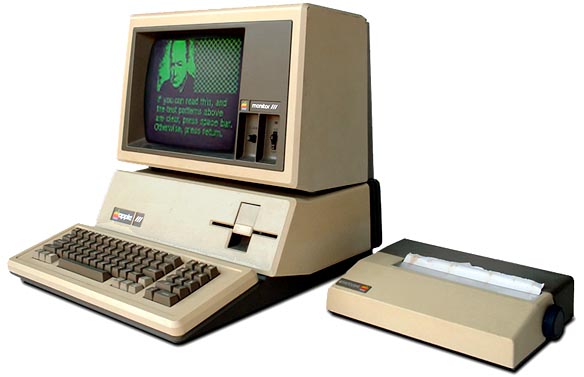
     Everything started with the release of the Apple I computer. From there, Apple began to gain popularity in the public market.  With each release of a new product, the company saw great success and profits began to rise as well. However, Apple did have some struggles in the beginning of their journey.  Some of their products, such as the Apple III were "flops" in the market and were not very big sellers.  Small setbacks like this one made it harder for Jobs and his business partner Steve Wozniak to keep Apple afloat.
Apple III was not as successful as I or II
     After a short hiatus from the company when he was fired, Steve Jobs made a strong resurgence as he introduced the iMac in 1998.  This was considered by some as the most revolutionary move by Jobs since the introduction of the original Macintosh back in the mid 1980's.  With the Apple brand back on top of its game, they hit another homerun with the release of the very first iPod in 2001.  This portable music player changed the way people listened to music.  The iPod was the must-have product of the early 2000's.  There was no other product like it out on the market that could compete.  Just about every year after that, Apple released a different model of the iPod or an updated version of a previous model with improvements on each one.
time line of iPod models over the years
     Just when people thought the craze of the iPod couldn't be topped, Jobs came out with the iPhone which without a doubt was way ahead of the rest of the cellphones available at the time.  With hundreds of amazing features and incredible speeds, Steve Jobs had done it again; changed the entire way people viewed cellphones.  Years later, Apple introduced the iPad, a user-friendly tablet computer that no other company had even thought was possible of creating.
     So many great things can be said about the man who most-notably wore a simple black turtleneck and blue jeans.  He changed millions of peoples lives and the way they go about their everyday lives.  One of the most richest men in the world, worth billions, Steve Jobs was a revolutionary, innovator, and businessman.  He was always way ahead of the curve when it came to his products and this kind of out-of-the-box thinking led him to all of the amazing success he had in his life.  It will be very interesting to see how Apple will continue on without the great mind of Steve Jobs.


Steve Jobs having fun with the new PhotoBooth feature back in 2005

 
A little more history on Steve Jobs and Apple